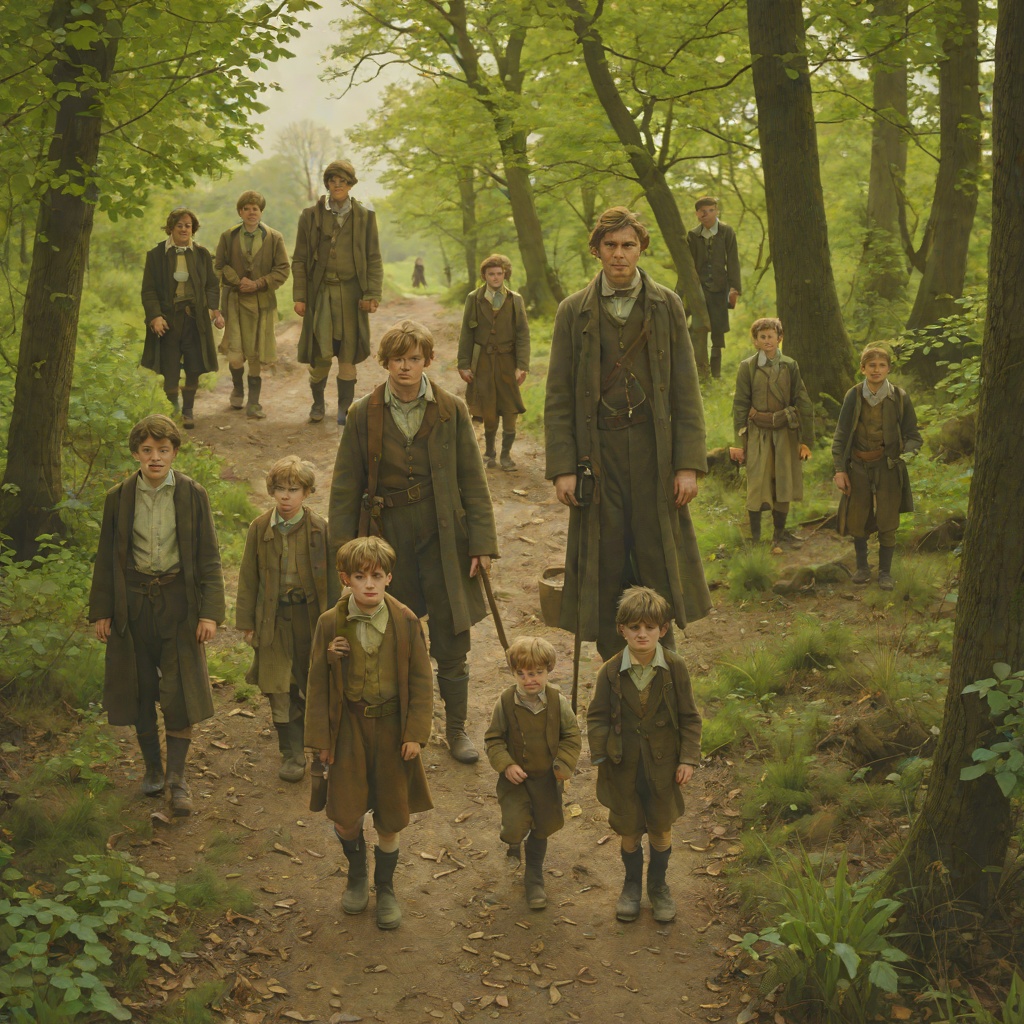
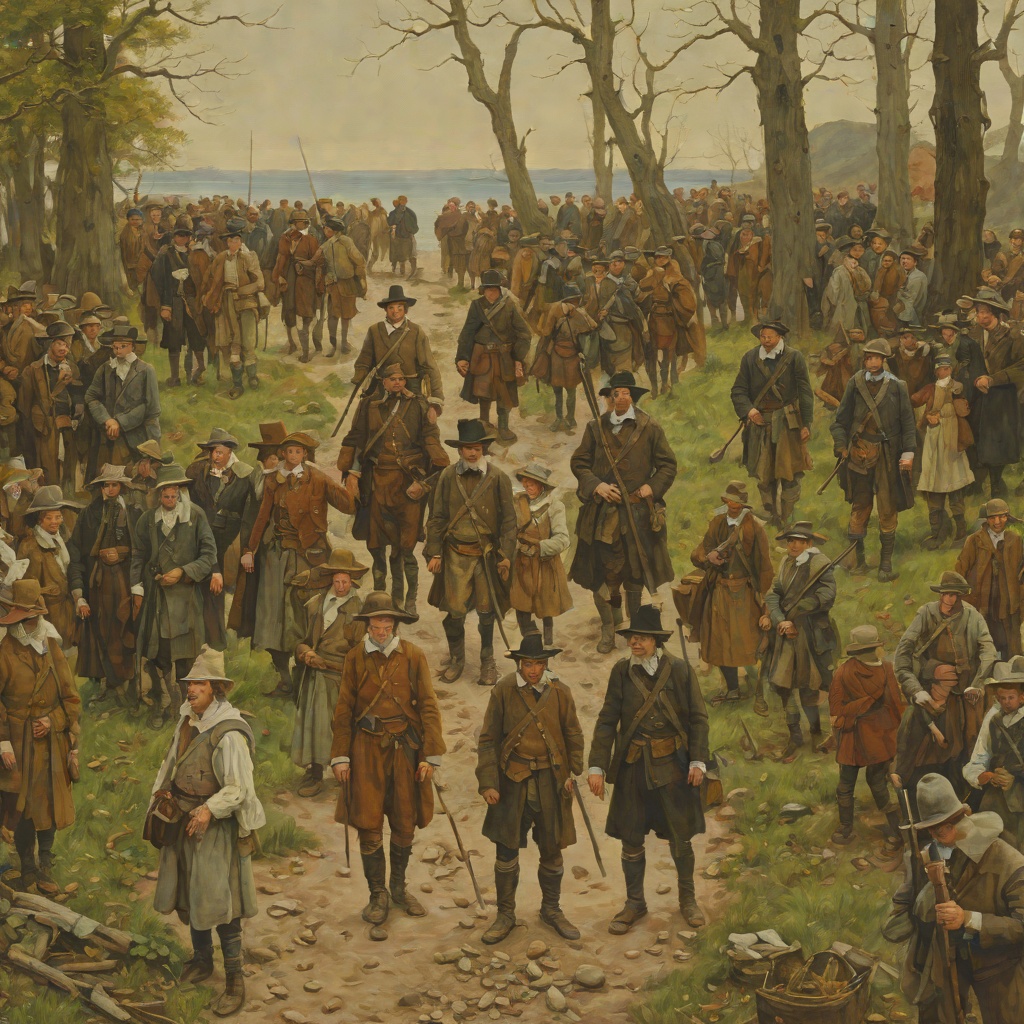
The pilgrims gather around Harold
The Unlikely Pilgrimage of Harold FryThe pilgrims gather around Harold marks the moment when Harold Fry's solitary pilgrimage ceases to be a private act and becomes a public movement. On his forty-seventh day of walking, he is joined by a middle-aged woman and a father of two, and from that point the walk is never the same. The gathering transforms his lonely journey into a collective enterprise bound by Queenie Hennessy, yet it also introduces the conflicts, compromises, and confusions that will eventually tear the group apart. It is the communal heart of the pilgrimage, where Harold's faith is both amplified and tested, and where the novel's meditation on belief, belonging, and the burden of others reaches its fullest expression.
The First Companions
The gathering begins modestly with two arrivals. Kate, a small woman dressed in black, explains that she has recently suffered great pain but wishes to leave it behind. She marches with her chin thrust out and slightly upwards, as if struggling to see beyond the brim of a floppy hat, sweat beading her hairline and wet half-moons hanging beneath her armpits. Wilf, who has been walking with Harold, immediately observes that she is fat, and when Harold gently objects, Wilf insists she is still fat. The second arrival is a man who calls himself Rich, short for Richard, surname Lion. He had been in finance but got out of the business in his mid thirties, and since then has been 'winging it'. Reading about Harold's journey filled him with a hope he had not experienced since childhood, so he packed only a few necessaries and set off. He is a tall man, like Harold, with an assertive voice that has an adenoidal ring, wearing professional boots, camouflage trousers, and a kangaroo-leather bush hat bought online, and carrying a tent, a sleeping bag, and a Swiss Army knife for emergencies.
The Burden of Company
As the newly formed party makes its way to Leeds, discussions begin about the route. Rich suggests they should avoid cities and make for the moors, while Kate feels they should continue along the A61. When they ask Harold what he thinks, uncomfortable with conflict, he suggests they are both good ideas, as long as they get to Berwick. Having been alone for so long, Harold finds it tiring to be constantly in the company of others; their questions and enthusiasm both move and slow him. Yet because they have chosen to walk with him and support Queenie's cause, he feels responsible for them, as if he had asked them to join and must therefore listen to their different needs and secure their safe passage. Wilf sulks at Harold's side, hands dug in his pockets, complaining that his trainers are too small, and Harold feels the familiar pang he used to have with David, wishing he could be more companionable and fearing that his insecurity might look like arrogance. It takes over an hour to find somewhere everyone agrees they will be comfortable enough to sleep.
The Growing Crowd
Within two days, Rich has a problem with Kate. It is not anything she has said exactly, he tells Harold, but more her manner; she behaves as if she thinks she is better simply because she arrived thirty minutes earlier. 'And you know what?' says Rich, beginning to shout, 'She drove here.' On reaching Harrogate, Kate suggests they visit the Royal Baths to freshen up; Rich sneers but concedes he could do with spare blades for his knife. Not wanting either, Harold sits in the municipal gardens, where he is approached by several well-wishers asking for news of Queenie, while Wilf seems to disappear. From this point, others join. They come for a day, maybe two; if it is sunny, there could be a crowd. Campaigners, ramblers, families, dropouts, tourists, and musicians arrive, bringing banners, camp fires, debates, physical warm-ups, and music. People talk movingly about the loved ones they have lost to cancer and the things they regret from their past. The greater the numbers, the slower they become, for they must accommodate the less experienced walkers and feed them: roast potatoes, garlic on sticks, beetroot in foil. Rich, who has a book about natural foraging, insists on making hogweed fritters. The daily mileage drops further, sometimes to no more than three.
The Communal Faith
Despite its slowness, the group seems sure of itself in a way that is new to Harold. They tell themselves they are no longer an assortment of torsos and feet and heads and hearts but one single energy, bound by Queenie Hennessy. The walk had been an idea inside Harold for so long that when other people pledge their belief in it he is touched, and more than touched: he knows it could work. If he had known before, he knows it now in a deeper way. They put up tents, unroll sleeping bags, and sleep beneath the sky, promising Queenie will live, with the dark peaks of Keighley Moor curving to their left. Harold lights the camp fire and reminds himself that it took at least a few days to find his own rhythm; it would be unkind to abandon them when they have sought him out and made such a commitment to Queenie. He even wonders whether her chances of survival would be greater the more people there are who believe in her and keep walking.
The Seeds of Division
Within only a few days, however, tensions begin to develop. Kate has no time for Rich, calling him an egomaniac, while he calls her a bitter cow. During the course of one evening, both the gorilla man and a visiting student sleep with the same primary-school teacher, and Rich's attempts to resolve the animosity threaten to end in a punch-up. Wilf cannot stop trying to convert fellow walkers to God or asking for prayers to be said for Queenie, which leads to further aggravation. When an amateur walking group pitches up for the night, there are more disagreements: some argue that tents are not in the true spirit of Harold's journey, some want to avoid roads altogether and head towards the more challenging Pennine Way, and Rich sparks off another round by asking about roadkill. Harold listens with growing unease. He does not mind where people sleep, or how they walk, or what they eat; he simply wants to get to Berwick. The gathering that began as a testament to shared faith has become a source of friction, and Harold, who once walked freely beneath the stars, now finds himself slowed, burdened, and responsible for a crowd he never asked to lead.